``Where the
Bishop is, there let the multitude of believers be;
even as where Jesus is, there is the Catholic Church'' Ignatius of
Antioch, 1st c. A.D
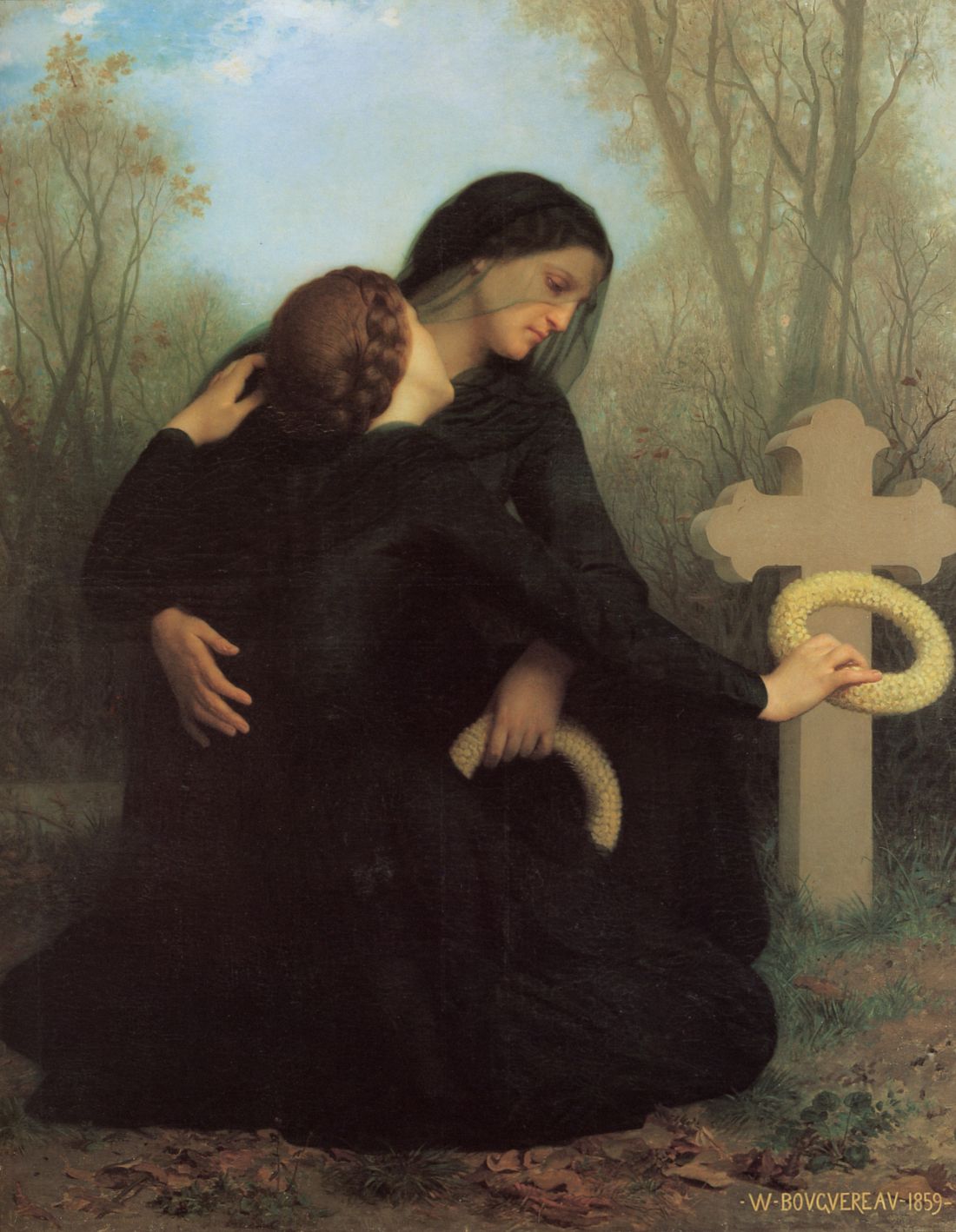
All Souls Day
There is a
Mexican saying that we die three deaths: the first when our bodies die,
the second when our bodies are lowered into the earth out of sight, and
the third when our loved ones forget us. Catholics forestall that last
death by seeing the faithful dead as members of the Church, alive in
Christ, and by praying for them -- and asking their prayers for us --
always. Cardinal Wiseman wrote in his Lecture XI:
Sweet is the
consolation of the dying man, who, conscious of imperfection, believes
that there are others to make intercession for him, when his own time
for merit has expired; soothing to the afflicted survivors the thought
that they possess powerful means of relieving their friend. In the
first moments of grief, this sentiment will often overpower religious
prejudice, cast down the unbeliever on his knees beside the remains of
his friend and snatch from him an unconscious prayer for rest; it is an
impulse of nature which for the moment, aided by the analogies of
revealed truth, seizes at once upon this consoling belief. But it is
only a flitting and melancholy light, while the Catholic feeling,
cheering though with solemn dimness, resembles the unfailing lamp,
which the piety of the ancients is said to have hung before the
sepulchres of their dead.
Though we should
daily pray for the dead in Purgatory, above all for our ancestors,
today is especially set aside for hanging that "unfailing lamp
before the sepulchres of our dead" as we are told to do by Sacred
Scripture:
II Machabees 12:
43-46
And making a gathering, [Judas] sent twelve thousand drachms of silver
to Jerusalem for sacrifice to be offered for the sins of the dead,
thinking well and religiously concerning the resurrection, (For if he
had not hoped that they that were slain should rise again, it would
have seemed superfluous and vain to pray for the dead,) And because he
considered that they who had fallen asleep with godliness, had great
grace laid up for them. It is therefore a holy and wholesome thought to
pray for the dead, that they may be loosed from sins.
At the three
Masses offered today, the glorious Sequence "Dies
Irae" (also used in Requiem Masses, i.e., Masses for the Dead) will
be recited after the Epistle, Gradual, and Tract ("Dies Irae" means
"Day of Wrath").
Between Noon of November 1 and Midnight tonight, a person who has been
to confession and Communion can gain a plenary indulgence, under the usual conditions,
for the poor souls each time he visits a church or public oratory and
recites the Our Father, the Hail Mary and the Glory be to the Father
six times. This is a special exception to the ordinary law of the
Church according to which a plenary indulgence for the same work can be
gained only once a day. Because of this, some of the customs described
below may be begun on All
Saints Day.
Also, the faithful who, during the period of eight days from All Saints
Day, visit a cemetery and pray for the dead may gain a plenary
indulgence, under the usual conditions, on each day of the Octave,
applicable only to the dead. Here is a simple invocation for the dead,
called the "Eternal Rest" prayer:
Eternal rest
grant unto him/her (them), O Lord; and let perpetual light shine upon
him/her (them). May he/she (they) rest in peace. Amen.
Latin version:
Réquiem ætérnam dona ei (eis) Dómine; et lux perpétua lúceat ei (eis).
Requiéscat (Requiéscant) in pace. Amen.
Catholics also
pray this prayer for the dead anytime throughout the year, and whenever
they pass a cemetery. Many families pray a Rosary
nightly for the dead throughout the Octave of All Saints, replacing the
Fatima prayer with the Eternal Rest prayer.
Customs
Many Catholics
prepare for this feast by praying the the All Souls Novena or the Novena for the Holy Souls in Purgatory
starting on October 24 and ending on November 1. For the feast itself,
one of the Litanies for the Dead
would be a good choice of prayer. And, when visiting a cemetery, these
prayers are good ones:
Prayer when Visiting a Cemetery
I prostrate myself over this earth where the mortal remains of my
beloved parents, relatives, friends, and all my brothers and sisters in
faith repose, those who have preceeded me on the road to Eternity. What
can I do for them? O Divine Jesus, Who suffering and dying for our love
has purchased with the price of Your Blood our eternal life: I know You
live and hear my pleas and that the grace of Your Redemption is most
abundant thus, forgive O Most Merciful God the souls of these my
deceased beloved; free them from all pains and all tribulations and
embrace them in the bosom of Your Goodness and in the joyful company of
Your angels and Saints so that, free of all pain and anguish, they
praise, enjoy and reign with You in the Paradise of Your Glory forever
and ever. Amen.
A Prayer for the
Forgotten Dead
O merciful God, take pity on those souls who have no particular friends
and intercessors to recommend them to Thee, who either through the
negligence of those that are alive, or through length of time are
forgotten by their friends and by all. Spare them, O Lord, and remember
Thine own mercy, when others forget to appeal to it. Let not the souls
which Thou has created be parted from Thee, their Creator. They are Thy
work, and though they have sinned, they have been redeemed by Thee.
Vouchsafe, therefore, to look upon them and to deliver them from the
intolerable pain of absence from Thee; the light and love of all Thy
creatures. Oh! place them in the number of Thy blessed Saints and
citizens through Jesus Christ their Savior. Amen.
It is
practically universal folk belief that the souls in Purgatory are
allowed to return to earth on All Souls Day. In Austria, they are said
to wander the forests, praying for release. In Poland, they are said to
visit their parish churches at midnight, where a light can be seen
because of their presence. Afterward, they visit their families, and to
make them welcome, a door or window is left open. In many places, such
as some areas in Italy, a
place is set for the dead at supper, or food is otherwise left out for
them. In Sicily, children who've prayed for the dead during the year
run to find little hidden gifts -- sweets, cookies, toys, puppets made
of sugar -- "from" their dead ancestors.
No matter the particular, local traditions, throughout the Octave of
All Saints, our beloved
dead should be remembered and prayed for. During our visits to their
graves, we spruce up their resting sites,
sprinkling them with holy water, leaving votive candles, and adorning them with flowers
(especially chrysanthemums and marigolds) to symbolize the Eden-like
paradise that man was created to enjoy, and may, if saved, enjoy after
death and any needed purgation.
Today is a good day to not only remember the dead in prayer,
but to tell your children about their ancestors. Bring out
those old photo albums and family trees to help you, here are pdfs of a
6-generation
family tree, a 7-generation
family tree, and an 8-generation
family tree)! Write down your family's
stories for your children and grandchildren (How did you and your
spouse meet? How did your parents meet? What work did everyone do? What
were their childhoods like? Etc.). Impress upon your children the
importance of their ancestors! Bring to their minds these words from
Ecclesiasticus:
Ecclesiasticus
44:1-15
Let us now praise men of renown, and our fathers in their generation.
The Lord hath wrought great glory through his magnificence from the
beginning. Such as have borne rule in their dominions, men of great
power, and endued with their wisdom, shewing forth in the prophets the
dignity of prophets, And ruling over the present people, and by the
strength of wisdom instructing the people in most holy words. Such as
by their skill sought out musical tunes, and published canticles of the
scriptures. Rich men in virtue, studying beautifulness: living at peace
in their houses. All these have gained glory in their generations, and
were praised in their days. They that were born of them have left a
name behind them, that their praises might be related:
And there are some, of whom there is no memorial: who are perished, as
if they had never been: and are become as if they had never been born,
and their children with them. But these were men of mercy, whose godly
deeds have not failed: Good things continue with their seed, Their
posterity are a holy inheritance, and their seed hath stood in the
covenants. And their children for their sakes remain for ever: their
seed and their glory shall not be forsaken. Their bodies are buried in
peace, and their name liveth unto generation and generation. Let the
people shew forth their wisdom, and the Church declare their praise.
As usual with
big Catholic Feast days, food is involved, with many
Catholic families having picnics near their loved ones' graves.
Traditional foods include "Soul Food" --- foods made of lentils or
peas.
Basic Split
Pea Soup (serves 4)
1 cup chopped onion
2 cloves garlic (optional)
1 teaspoon vegetable oil or bacon grease
1 pound dried split peas
1 pound ham bone
1 c. chopped ham
1 c. chopped carrots (optional)
salt and pepper to taste
In a medium pot, sauté onions in oil or bacon grease. (Optional: add
garlic and sauté until just golden, then remove). Remove from heat and
add split peas, ham bone and ham. Add enough water to cover
ingredients, and season with salt and pepper.
Cover, and cook until there are no peas left, just a green liquid, 2
hours. (Optional: add carrots halfway through) While it is cooking,
check to see if water has evaporated. You may need to add more water as
the soup continues to cook.
Once the soup is a green liquid remove from heat, and let stand so it
will thicken. Once thickened you may need to heat through to serve.
Serve with either sherry or sour cream on top, and with a crusty bread.
In Italy, the
sine qua non of All Souls' celebrations is a dry, crunchy cookie
called "Ossi di Morto," or "Bones of Death":
Ossi di Morto
1 1/4 cups flour
10 oz almonds
1/2 cup sugar
1 oz pine nuts
1 TBSP butter
A shot glass full of brandy or grappa
The grated zest of half a lemon
Cinnamon
One egg and one egg white, lightly beaten
Blanch the almonds, peel them, and chop them finely (you can do this in
a blender, but be careful not to over-chop and liquefy).
Combine all the ingredients except the egg in a bowl, mixing them with
a spoon until you have a firm dough. Dust your hands and work surface
with flour, and roll the dough out between your palms to make a "snake"
about a half inch thick. Cut it into two-inch long pieces on the
diagonal. Put on greased and floured cookie sheet, brush with the
beaten egg, and bake them in a 330-350 oven for about 20 minutes. Serve
them cold. Because they are a dry, hard cookie, it is good to serve
these with something to drink.
A softer,
chewier Italian cookie for the day are the "Beans of
the Dead":
Fave dei Morti
2 cups whole almonds, blanched and toasted
1/4 cup pine nuts
1 cup unbleached all-purpose flour
1 teaspoon of ground cinnamon
1 1/4 cups confectioner’s sugar
1 large egg plus 2 egg yolks
Zest of a lemon
1 tablespoon of grappa
Preheat oven to 350. Line two cookie sheets with
parchment.
In a food processor, add the almonds and pulse 'til they
resemble sand. Set aside, and then repeat the process with the pine
nuts (not too long; pine nuts can go oily).
In a small bowl, lightly beat the egg, yolks, lemon zest and
grappa together and set aside.
In a different, larger bowl, mix the flour, almonds and
cinnamon and then sift the confectioner’s sugar in. Mix in
the pine nuts, then form a well in the center. Pour the egg
mixture into the the well, and work with your hands until a dough
forms.
Cut a piece of the dough off and roll with your hands until
you have a thick "rope." Cut off 3/4" pieces of the "rope" and roll
each into a ball. Gently flatten the ball and mold it to give it a
slightly oval shape (you want it to be shaped like a fava bean).
Place them one inch apart on the cookie sheets, repeating 'til your
dough is gone. Bake for 10 minutes or until slightly golden
and cracked on top. Cool for 15 minutes.
In Naples, some residents have become devoted to especially
praying for the dead laid to rest in the Fontanelle Cemetery, a great
ossuary in a cave below the city. The bones there belong to their
remote ancestors, and also thousands of anonymous Neapolitans who were
felled by the plague in 1656. To this day, some residents of Naples
visit the ossuary, clean the bones, and pray for the souls attached to
them while also asking for their prayers in return.
In Mexico "Dia de Los Muertos" (Day of the Dead) is
celebrated very
joyfully -- and colorfully. A special altar, called an ofrenda, is made
just for these days of the dead (1 and 2 November). It has at least
three tiers, and is covered with pictures of Saints, pictures of and
personal items belonging to dead loved ones, skulls, pictures of
cavorting skeletons (calaveras), marigolds, water, salt, bread, and a
candle for each of their dead (plus one extra so no one is left out).
Chicanos will make a special bread just for this day, Pan de Muerto,
which is sometimes baked with a toy skeleton inside. The one who finds
the skeleton will have "good luck." This bread is eaten during picnics
at the graves along with tamales, cookies, and chocolate. They also
make brightly-colored skulls out of sugar to place on the family altars
and give to children. Below are recipes for those skulls and for Pan de
Muerto:
Sugar Skulls
2 cups powdered sugar
1 egg white
1 TBSP. corn syrup
1/2 tsp. vanilla
1/3 cup cornstarch
colored icing
1 fine paintbrush
Sift powdered sugar. Mix the egg white, corn syrup, and vanilla in a
very clean bowl, then add the powdered sugar with a wooden spoon. When
almost incorporated, start kneading with the tip of your fingers until
you can form a small ball. Dust with cornstarch on board. Keep on
kneading until smooth, then form into skull shapes. Let dry completely,
then paint with colored icing, including the names of the people you
are giving them to.
Pan De Muerto (makes two loaves)
1 tablespoon active, dry yeast
1/4 cup of lukewarm water
4 to 5 cups all-purpose flour and extra flour for dusting
1 teaspoon of salt
1/4 teaspoon of fresh grated nutmeg
1/2 cup unsalted butter at room temperature
3/4 cup white sugar
6 extra large eggs at room temperature
zest of 1 orange
2 tablespoons orange blossom water
3 tablespoons Sambuca liqueur (optional)
1 egg for egg wash
2 tablespoons of water for egg wash
1/4 cup water for brushing bread
1/2 cup white sugar for dusting
Glaze:
1/2 cup sugar
1/3 cup fresh orange juice
2 tablespoons grated orange zest
In a small bowl combine the water, yeast, 1/3 cup of flour, mix well
and let it stand until it doubles in volume. In a large bowl mix the
flour, salt, nutmeg and set aside.
In a large bowl with a whisk mix the butter and sugar until creamy
color.
In a medium bowl mix the eggs, orange blossom water, orange zest (and
Sambuca, optional). Set aside.
With a whisk, incorporate the egg mixture 1/3 at the time to the butter
mixture. Incorporate the yeast mixture to the butter/egg mixture. Add
the flour mix 1/3 at the time and work it with a wooden spoon until it
incorporates.
Dust the working counter and your hands with flour and transfer the
dough to the counter. Start working the dough by folding it with a
scraper. It should be sticky. Keep dusting dough with flour and folding
in order to firm it up. Once it firms up, continue to dust with flour
and start kneading. Knead the dough by pulling then folding it back and
forth for 3 minutes. Then lightly dust the dough and continue working
for another 3 minutes and dust again until the dough is smooth and a
little sticky, but don't add large amounts of flour at once or your
bread my have flour traps. As it firms up continue to knead for 15
minutes. Don't worry if the dough is slightly sticky - it will change
after you let it rest.
When you're finished kneading form it into a loose ball and cinch it
closed. Flip it over and transfer the dough into a large greased bowl.
Cover the bowl with plastic wrap and let it rest at room temperature
until it doubles in volume.
Flour your knuckles and punch down the dough so it deflates and turn it
onto a floured counter. Divide the dough into 3 portions. Punch down 2
portions of dough, fold and cinch dough then flip over and shape each
one into a ball. Place the 2 balls of dough on a baking tray with
parchment paper. Press both dough balls down to make them flat. Divide
the last portion into three more portions. Make 2 of the 3 portions
into little balls. Cut the last piece of dough in half and roll one
portion of that piece into a long rope. Cut the rope in half and then
cut one of the halves into smaller segments. Mould each segment to look
like little bones by rolling and pinching them. Trim the edges with
your pastry scraper and set them aside on baking tray. Form small
tear-shaped pieces with the other segment of rope. Roll out the last
piece of excess dough into 2 long ropes and another ball and set all
pieces on baking sheet. You may not have enough dough for this, but if
you do, simply make another small loaf. Cover with a dry cloth and let
rest in a warm place for an hour or when it doubles in volume.
Preheat the oven to 400 degrees F. Let the dough rest until it almost
doubles in size. Then very carefully brush the round loaves with egg
wash. Immediately place and press the "bones" and "the tears" onto each
loaf before the egg wash dries. And place the smaller dough balls on
top of each. Glaze each loaf with egg wash. Decorate the extra
remaining ball with the last 2 pieces of rope and finish off with small
tears. Place the decorated loaves in the oven, turn down to 350º F and
bake for 15 minutes. Turn the tray around and bake for another 15 to 20
minutes or until bread is brown. Pull bread out of the oven when it is
ready and cool loaves on cooling wire racks for 10 minutes. Mix glaze
ingredients, apply glaze all over the bread with a pastry brush, then
immediately dust each loaf with sugar. Let it rest for 10 minutes.
Serve warm.
As to music, we
have an embarrassment of riches to choose from. Just four of the many
Requiem Masses
that have been written for the dead are those of Mozart, Liszt, Fauré,
and the very operatic Verdi:
Tales from
The Golden Legend's "The Commemoration of All Souls"
By Jacobus de Voragine, Archbishop of Genoa, A.D. 1275
...It is
read that some fishers of S. Thibault that fished on a time in harvest,
and took a great piece of ice instead of a fish. And they were gladder
thereof than of a fish, because the bishop had a great burning of heat
in his leg, and they laid that ice thereto and it refreshed him much.
And on a time the bishop heard the voice of a man in the ice, and he
conjured him to tell him what he was. And the voice said to him: I am a
soul which for my sins am tormented in this ice, and may be delivered
if thou say for me thirty Masses continually together in thirty days.
And the bishop emprised to say them, and when he had said half of them
he made him ready to continue forth and say the other.
And the devil made a dissension in the city, that the people of the
city fought each against other, and then the bishop was called for to
appease this discord, and did off his vestments and left to say the
Mass.
And on the morn he began all new again. And when he had said the two
parts, him seemed that a great host had besieged the city, so that he
was constrained by dread, and left to say the office of the Mass. And
after, yet he began again service, and when he had all accomplished
except the last Mass, which he would have begun, all the town and the
bishop's house were taken by fire. And when his servants came to him,
and bade him leave his Mass, he said: Though all the city should be
burnt, I shall not Ieave to say the Mass. And when the Mass was done
the ice was molten, and the fire that they had supposed to have seen
was but a phantom and did no harm.
There was a master which was chancellor at Paris named
Silo, which had a scholar sick, and he prayed him that after his death
he should come again to him and say to him of his estate. And he
promised him so to do, and after died.
And a while after he appeared to him clad in a cope written full of
arguments fallacious, and sophisms, and was of parchment, and
withinforth all full of flame of fire. And the chancellor demanded him
what he was. And he told to him: I am such one that am come again to
thee. And the chancellor demanded him of his estate, and he said: This
cope weigheth on me more than a mill-stone or a tower, and it is given
me for to bear, for the glory that I had in my sophisms and sophistical
arguments, that is to say, deceivable and fallacious. The skins be
light, but the flame of fire withinforth tormenteth and all to-burneth
me.
And when the master judged the pain to be light, the dead scholar said
to him, that he should put forth his hand and feel the lightness of his
pain. And he put forth his hand, and that other let fall a drop of his
sweat on it, and the drop pierced through his hand sooner than an arrow
could be shot through, whereby he felt a marvellous torment. And the
dead man said: I am all in such pain. And then the chancellor was all
afeard of the cruel and terrible pain that he had felt, and concluded
to forsake the world, and entered into religion with great devotion.
As S. Augustine saith: Sometimes souls be punished in the
places where they have sinned, as appeareth by an ensample that S.
Gregory reciteth in the fourth book of his Dialogues, and saith that
there was a priest which used gladly a bath, and when he came in to the
bath he found a man whom he knew always ready for to serve him.
And it happed on a day, that for his diligent service and his reward,
the priest gave to him a holy loaf. And he weeping, answered: Father,
wherefore givest thou me this thing? I may not eat it for it is holy. I
was sometime lord of this place, but after my death, I was deputed for
to serve here for my sins, but I pray thee that thou wilt offer this
bread unto Almighty God for my sins, and know thou for certain that thy
prayer shall be heard, and when then thou shalt come to wash thee, thou
shalt not find me. And then this priest offered a week entire sacrifice
to God for him, and when he came again he found him not.
And Peter, abbot of Cluny, saith that there was a priest
that sung every day Mass of requiem for all Christian souls, and hereof
he was accused to the bishop, and was suspended therefor of his oflice.
And as the bishop went on a day of great solemnity in the churchyard,
all the dead arose up against him, saying: This bishop giveth to us no
Mass, and yet he hath taken away our priest from us, now he shall be
certain but if he amend he shall die. And then the bishop assailed the
priest, and sang himself gladly for them that were passed out of this
world. And so it appeareth that the prayers of living people be
profitable to them that be departed, by this that the chanter of Paris
rehearseth.
There was a man that always as he passed through the
churchyard he said De Profundis for all Christian souls. And on a time
he was beset with his enemies, so that for succour he leapt into the
churchyard. And they followed for to have slain him, and anon all the
dead bodies arose, and each held such an instrument in his hand that
they defended him that prayed for them, and chased away his enemies,
putting them in great fear.
There was a knight that lay dead and his spirit taken from
him, and a while after the soul returned to the body again. And what he
had seen done he told, and said there was a bridge, and under that
bridge was a flood, foul, horrible, and full of stench, and on that
other side of the bridge was a meadow, sweet, odorous, and adorned full
of all manner of flowers. And there on that side of the bridge were
people assembled, clad all in white, that were filled with the sweet
odour of the flowers. And the bridge was such that if any of the unjust
would pass over the bridge, he should slide and fall into that stinking
river, and the righteous people passed over lightly and surely into
that delectable place.
And this knight saw there a man named Peter, which lay bound and great
weight of iron upon him, which when he asked why he lay so there, it
was said to him of another: He suffereth because if any man were
delivered to him to do vengeance, he desired it more to do it by
cruelty than by obedience.
Also he said he saw there a pilgrim that, when he came to the bridge,
he passed over with great lightness and shortly, because he had
well-lived here and purely in the world, and without sin.
And he saw there another named Stephen, which when he would have
passed, his foot slid that he fell half over the bridge, and then there
came some horrible black men and did all that they might to draw him
down by the legs, and then came other right fair creatures and white,
and took him by the arms and drew him up.
And as this strife endured, this knight that saw these things returned
to his body and knew not which of them vanquished. But this way we
understand that the wicked deeds that he had done strove against the
works of alms, for by them that drew him by the arms upward it appeared
that he loved alms, and by the other that he had not perfectly lived
against the sins of the flesh.
Like as S. Gregory recounteth, in the fourth book of his
Dialogues, that one of his monks named Justus when he came to his last
end, he showed that he had hid three pieces of gold, and thereof
sorrowed sore, and anon after he died. And then S. Gregory commanded
his brethren that they should bury his body in a dunghill, and the
three pieces of gold with him, saying: Thy money be to thee in
perdition. Nevertheless, S. Gregory commanded one of his brethren to
say for him every day mass, thirty days long, and so he did. And when
he had accomplished his term, the monk that was dead appeared on the
thirtieth day to one which demanded how it was with him, and he
answered to him: I have been evil at ease unto this day, but now I am
well. I have this day received Communion, and thie sacrifice of the
altar profiteth not only to them that be dead, but also to them that be
living in this world.
It happed there was a man which was with others, laboured
in a rock for to dig for silver, and suddenly the rock fell on them and
slew them all save this one man, which was saved in a crevice of the
rock, but for all that he might not issue ne go out, and his wife
supposed that he had been dead, and did do sing every day a Mass for
him, and bare every day to the offering a loaf and a pot of wine and a
candle. And the devil which had envy thereat appeared three days
continually to this woman in form of a man, and demanded her whither
she went, and when she had said to him, he said to her: Thou goest in
vain, for the Mass is done. And thus she left the Mass three days that
she did not sing for him.
And after this another man digged in the same rock for silver, and
heard under this the voice of this man, which said to him: Smite softly
and spare thine hand, for I have a great stone hanging over my head.
And he was afeard, and called more men to him for to hear this voice,
and began to dig again, and then they heard semblably that voice, and
then they went more near and said: Who art thou? And he said: I pray
you to spare your smiting, for a great stone hangeth over my head.
And then they went and digged on that one side till that they came to
him and drew him out all whole. And they enquired of him in what manner
he had so long lived there. And he said that every day was brought to
him a loaf, a pot of wine, a candle, save these three days. And when
his wife heard that, she had great joy, and knew well that he had been
sustained of her offering, and that the devil had deceived her that she
had do sing no Mass those three days.
And as Peter, the abbot of Cluny, witnesseth and saith
that, in the town of Ferrara in the diocese of Grationopolitana, that a
mariner was fallen into the sea by a tempest, and anon a priest sang
Mass for him, and at the last he came out of the sea all safe. And when
he was demanded how he escaped, he said that when he was in the sea and
almost dead, there came to him a man which gave to him bread, and when
he had eaten he was well comforted, and recovered his strength, and was
taken up of a ship that passed by. And that was found that it was the
same time that the priest offered to God the blessed sacrament for him.
...a solemn doctor which rehearseth that, there was a woman
which had her husband dead, and she was in great despair for poverty.
And the devil appeared to her, and said that he would make her rich if
she would do as he would say to her, and she promised to do it. And he
enjoined her that the men of the church that she should receive into
her house, that she should make them do fornication. Secondly, that she
should take into her house by daytime poor men, and in the night drive
them out void, and having nothing. Thirdly, that she should in the
church let prayers by her jangling, and that she should not confess her
of none of all these things.
And at the last, as she approached towards her death, her son warned
her to be confessed, and she discovered to him what she had promised,
and said that she might not be shriven, and that her confession should
avail her nothing. But her son hasted her, and said he would do penance
for her. She repented her, and sent for to fetch the priest, but tofore
ere the priest came, the devils ran to her and she died by the
horribleness of them. Then the son confessed the sin of the mother and
did for her seven years penance, and that accomplished he saw his
mother, and she thanked him of her deliverance. And in likewise avail
the indulgences of the Church.
It happed that a legate of the pope prayed a noble knight,
that he would make war in the service of the church and ride to the
Albigeois, and he would therefor give pardon to his father which was
dead. And the knight rode forth, and abode there a whole Lent, and that
done his father appeared to him more clear than the day, and thanked
him for his deliverance.
Whereof is read that when a knight lay in his bed with his
wife, and the moon shone right clear which entered in by the crevices,
he marvelled much wherefore man which was reasonable obeyed not to his
Maker, when the creatures not reasonable obeyed to him. And then began
to say evil of a knight which was dead, and had been familiar with him;
and then this knight, of whom they so talked, entered into the chamber
and said to him: Friend, have none evil suspicion of any man, but
pardon me if I have trespassed to thee.
And when he had demanded him of his state, he answered: I am tormented
of divers torments and pains, and especially because I defouled the
churchyard and hurt a man therein, and despoiled him of his mantle
which he ware, which mantle I bear on me and is heavier than a
mountain.
And then he prayed the knight that he would do pray for him. And then
he demanded if he would that such a priest should pray for him, or such
one, and the dead man wagged his head, and answered not, as he would
not have him.
Then he asked of him if he would that such a hermit should pray for
him, and then the dead man answered: Would God that he would pray for
me. And the living knight promised that he should pray for him, and
then the dead man said: And I say to thee that this day two years thou
shalt die, and so vanished away. And this knight changed his life into
better and at the day slept in our Lord.
As Turpin the archbishop of Rheims saith, that there was a
noble knight that was in the battle with Charles the Great for to fight
against the Moors, and prayed one that was his cousin that if he died
in battle, that he should sell his horse and give the price thereof to
poor people. And he died, and that other desired the horse and retained
it for himself.
And a little while after, he that was dead appeared to that other
knight, shining as the sun, and said to him: Cousin, thou hast made me
to suffer pain eight days in purgatory, because thou gavest not the
price of my horse to poor people, but thou shalt not escape away
unpunished. This day devils shall bear thy soul into hell, and I being
purged go into the kingdom of heaven.
And suddenly was a great cry heard in the air, as of bears, lions, and
wolves, which bare him away. Then let every executor beware that he
execute well the goods of them that they have charge of, and to beware
by this ensample heretofore written, for he is blessed that can beware
by other men's harms. And let us also pray diligently for all Christian
souls, that by the moyen of our prayers, alms, and fastings, they may
be eased and lessed of their pains.




 ...It is
read that some fishers of S. Thibault that fished on a time in harvest,
and took a great piece of ice instead of a fish. And they were gladder
thereof than of a fish, because the bishop had a great burning of heat
in his leg, and they laid that ice thereto and it refreshed him much.
...It is
read that some fishers of S. Thibault that fished on a time in harvest,
and took a great piece of ice instead of a fish. And they were gladder
thereof than of a fish, because the bishop had a great burning of heat
in his leg, and they laid that ice thereto and it refreshed him much. 